I’m your father, and I know your heart. I’m sorry they made you suffer the way they did, and that I couldn’t stop them as hard as I tried.

I’m your father, and I know your heart. I’m sorry they made you suffer the way they did, and that I couldn’t stop them as hard as I tried.
Posted in For My Princess Lili | Leave a Comment »
He never was and he never will be. I’m sorry they forced you to live this fiction.
I’m your Dad.
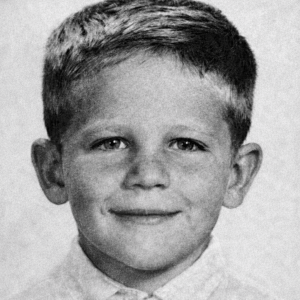

And I’ll love you until the end of time.
Posted in For My Princess Lili, Lili and Daddy | Leave a Comment »
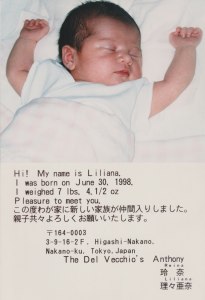 Dear Lili,
I can’t seem to wrap my head around the fact that you’re already 28 years old. In my mind, you’re still that six-year-old kid I last saw in January 2005 to tell you your grandmother passed away.
I remember the day you were born so well. I spent the whole day with your mother in the pre-delivery room, but I couldn’t witness your birth, as much as I wanted to. Your mother decided that — for whatever reason — you had to be born at Keio Hospital, which didn’t allow fathers to be present at the baby’s birth. I tried to convince your mother to pick another hospital, because as an American man I thought it natural to be with my wife at the birth of our child. She wouldn’t have it, and I had to relent lest an argument ensue. I even tried begging the doctor at the hospital to let me participate, as I had this image of the happy couple cradling our newborn together in the hosptial room. No dice. As it turned out, I didn’t even get to hold you for over a week. How incredibly cruel and sad it was. I wish I could have been there, but the alienation was just beginning. I guess I “did my part” already, and there was no need for my further involvement. If I sound bitter, it’s because I am. I missed the once chance in my life to witness the birth of my only child.
That’s the story of your birth that I’m sure you have never heard. I don’t know why I even told you now. I just thought you should know.
Anyway, I still hope that one day I can spend another birthday with you. Until then, know that I love you as much as I always have, and always will.
Always in my heart,
Your Dad

Posted in For My Princess Lili | Leave a Comment »
Traces of Kid
‘The leaves of memory seemed to make
A mournful rustling in the dark.’
– Henry Wadsworth Longfellow, The Fire of Drift-wood
Around the corner from his apartment is a small park where Tommy and Livy used to play. Here was the sandbox where she used to dig holes and fill them with water from the nearby faucet to float little boats. There was the swing set where he used to push her as she screamed “Higher, Daddy, higher!” In the far corner was the spot where they lit sparklers and pinwheels in the summertime. The second to last time Tommy saw her, she had accidentally burned her little finger on one of the spent sparklers when she tried to pick it up, thinking it had already cooled down. Tommy recalled that he had made the same mistake as Livy when he was her age. Funny. Tommy ran her finger under the cool water from the park faucet and wiped away her little tears, holding her close to him as she rested her head against his chest while he carried her home. “I got you, Livy,” he told her. “I got you, don’t cry.”
Next to the park there is a small house with a portico in front in which the sakura somehow always managed to accumulate in piles in the springtime after they fell from a nearby cherry tree. Once on the way home from somewhere, Livy stopped at that house and scooped up armfuls of the sakura petals and tossed them into the air like she was celebrating something, and the sakura then were not petals at all, but instead confetti falling all about her as she giggled with glee. Tommy had his camera with him and managed to get a few shots of her doing that, those now being some of his favorite pictures of her. She was wearing that little pink turtleneck at the time that made its way into any number of his photographs of her for some reason.
On the way home from the park is the house where Livy’s little kindergarten friend Kenta used to live. Kenta, like Livy, had a Japanese mother and, strangely, a father also from New Jersey like Tommy. Funny how 6,000 miles from home a family just like his should happen to settle 100 yards from his front door. Kenta and his parents eventually moved back to Jersey, but not before Livy and Tommy ran into Kenta and his mother again one Saturday while Livy was visiting him post-separation. It was to be the last time Livy and her little friend were to see each other.
Along the major thoroughfare near his apartment, the Yamate Dori, is the bus stop where Livy used to wait in the morning to catch the Anpanman Bus to school. The school bus was vividly painted with Anpanman, a favorite anime character in Japan, along with Anpanman’s other cartoon friends. Tommy still saw it pass by once in a while with a new crop of little kindergarteners inside. In the mornings, the kids would all meet at the bus stop and run around playing while waiting for the bus to take them to school. Tommy remembered that there was a little dog that lived in the neighborhood with whom all the kids liked to play. She was a friendly little mutt who, Tommy imagined, thought was one of the kids.
Everywhere he looked, every time he turned around, Tommy found traces of Livy about him. In the house, of course, she was simply everywhere. He could still see her in the o-furo room where she took her first bath, and where they used to catch magnetic fish with the toy rod and reel he had bought for her. He saw her in the living room where she took her first steps, and where they watched cartoons together. He could see her in the tatami room where she said her first words, and where he read storybooks to her. Here was the sofa where he fed her from bottles when she was an infant. There was the toy chest that still held what used to be her favorite toys – the Brio train set, the Barbie dolls, the Tickle Me Elmo, the princess outfits. All still there. All still there.
And while she was now gone, like her once favorite toys, he too was still here. While his darling little girl, his adorable angel, was gone from this place, he too was still there. And as he remembered, whenever he saw her there in his mind in these places where she had once been but now was no more, as he drifted away into those times gone by, as ever the rain would fall.
Posted in Losing Livy | Leave a Comment »
“Injustice anywhere is a threat to justice everywhere.”
– Rev. Dr. Martin Luther King, Jr.
Having lost all attempts at “amicable negations” with his ex-wife and after having been denied his parental rights by the Japanese “legal system,” Tommy joined what was to become known as the Left-Behind Parent Movement. In the early years following the final divorce decree by the Japanese courts, Tommy had lost himself in wandering throughout other parts of Asia, staying away from Japan for as long as his school holidays and financial resources would allow. During this period of time, he had developed an unhealthy hatred for the country that had taken from him the most precious thing in the world — his only child. Escaping to the Temples of Angkor, the tranquil beaches of Koh Samui on the Gulf of Siam, and the wilds of the Himalayas in the Khumbu Region in Nepal afforded him some measure of relief from the agony of his loss, albeit a relief that evaporated upon his return to the island he had once loved, but which now he viewed as heartless and devoid of all human compassion. To him at these times, all Japanese people were complicit in the injustice he was experiencing through their indifference and sham pretense of fancying themselves as a “harmonious country” driven by a general disposition toward courtesy and “omotenashi,” or “hospitality” for outsiders. Were it not for a determination to be available for his daughter by staying close, Tommy might well have boarded a plane back to the States never to return. He considered himself a broken man, held together somehow only by a grim resolve to bring about some vague sense of “closure” to the whole unfortunate affair. He was one part bitterness, one part anger, and one part despair, and he honestly didn’t know how he was going to get through this traumatic amputation of his erstwhile parent-child relationship.
After several years of trying to readjust to a life as an un-parent, Tommy learned of a case of another left-behind parent, one Christian Sorensen, who had found himself in the custody of the local constabulary after attempting to “re-kidnap” his children from his ex-wife who had violated a court-sanctioned divorce agreement in Georgia that had awarded main custody of the kids to Christian with generous visitation rights and alimony to his former spouse. Sorensen became something of a cause célèbre, with left-behind parents around Japan rallying to the cry of “Free Christian Sorensen!” Tommy started thinking that maybe he should get involved in the burgeoning movement after first avoiding it some years earlier in its nascent stage as he had just needed some time to deal with his PTSD. He had, in fact, been brushed off by U.S. government officials in the past who insisted that they “could not get involved in domestic matters in Japan,” and to “consult with a Japanese attorney.” Thus, Tommy had met with one roadblock after another in trying to get somebody — anybody — to take an interest in his cause. And so, despite the promise of reliving the pain the loss of Livy had engendered, Tommy dove headlong into the abyss.
Tommy got involved in any number of aspects of the movement, including meetings with other “LBPs,” protest marches through the streets of Shibuya, letters to his Congressman, President Obama, Secretary of State Clinton, and other government officials, and most importantly, he thought, meetings at the U.S. Embassy to get them to put pressure on Japan to do something about the injustices endemic in their system of “justice” when it came to parental and children’s rights. Calls for kyōdō shinken (parental rights) were coupled with those of coercing Japan to accede to the Hague Convention on the Civil Aspects of International Child Abduction.
There were actually two groups of left-behind parents in the movement — parents whose Japanese spouses literally abducted the couples’ children from foreign countries back to Japan and resident parents like himself who were victims of the institutional “abductions” brought about through Japan’s single custody system upon divorce. The idea was that by bringing these two different groups together changes in Japanese law might be brought about through “gai-atsu,” or outside pressure.
The U.S. Embassy officials at this point were actually extremely supportive of the efforts of parents such as himself, perhaps due to increased awareness of the issue and concerted action by parents, and in fact persuaded embassies from other countries to join together to issue a series of joint demarches, which were coordinated efforts among the various nations asserting a shared position of concern and request for action. Tommy attended a dozen meetings at the embassy to share his story and to continue to pressure his government and that of Japan to bring about justice for left-behind parents.
Ultimately, the embassy was successful in persuading Japan to sign on to the Hague Convention, and after some 40 years since it was first adopted, Japan finally signed on to the international treaty. Emboldened by this success, Tommy felt some measure of hope that the victory on that front would translate into changes in the Japanese legal system itself for resident parents following divorce, not only for foreign parents, but also for Japanese parents who had been similarly separated from their kids. The reality, though, was that that was not to happen, and Tommy’s efforts to help non-resident parents to be reunited with their children did not make any difference at all in the Japanese family courts. Twenty years later, Japanese politicians were still giving lip service to the issue, insisting that they were “looking into and discussing the matter,” which when translated into explicit English from the implicit Japanese meant they were weren’t going to do anything at all.
Moreover, there were deep divisions in the Left-behind Parent Movement due to different views on how to bring about resolutions to their situations, with some being more conciliatory and others more radical in their approaches. This was, after all, not an association born simply of shared interests, but instead one which attempted to unite deeply scarred and emotionally distraught people. Internecine warfare often broke out among the parents, and at times their anger at Japan was directed at one another. Tommy was not exempt from this misdirected anger and took sides as well, unleashing his own fury at parents he felt were trying to co-opt the movement for their own personal advantage, sometimes even for monetary gain. The hoped-for unity Tommy believed would bring about change was thus illusory, and the movement disintegrated over time.
Even Japan’s acquiescence to the Hague Convention, Tommy eventually was to learn, was a sham, with Japanese courts refusing to return children abducted from foreign countries by their Japanese mothers and fathers with claims of potential “domestic violence” on the part of gaijin spouses and assertions that it “would be wrong to return abducted children” back to the lands of their birth as it would be “traumatic for them after having become accustomed to life in Japan.” Or some other such nonsense.
To say that Tommy had become disillusioned anew was an understatement, and the ensuing realization that he had once again ran headlong into a dead end was almost too much for him to bear. He had spent several years “fighting the good fight” to no avail, and he now understood that the energy he had invested into the cause was nothing more than a distraction from and avoidance of his true feelings of sorrow over the loss. He no longer believed that concerted action and sheer determination had any chance against an intransigent Japan, and slowly he drifted away from the Left-behind Parent Movement. By this time, he and Livy had been separated from each other for some eight years, and the little girl he once walked to her kindergarten bus stop was now in high school. He shook his head the way a man in a drunken stupor tries to overcome his inebriated state. Reality wasn’t just knocking at his door — it was crashing through it like a battering ram. And there was no getting out of its way.
Posted in Losing Livy | Leave a Comment »
I see the bad moon a-rising,
I see trouble on the way.
I see earthquakes and lightning.
I see bad times today.
Don’t go around tonight,
Well it’s bound to take your life.
There’s a bad moon on the rise.
– Bad Moon Rising, Credence Clearwater Revival
How could he have been so stupid? How could he not have seen sooner the disaster that was to unfold? Were the signs all there that he somehow didn’t see, or was the inevitable result of this incompatible marriage impossible to predict?
Once again, Tommy felt the lash of self-recriminations upon his back, the familiar self-flagellations to which he had now become accustomed. The sting he felt now was well-deserved, he thought. He felt like a fool for not seeing what was to come, although at times he felt that such prescience was illogical, that the ability to look into the heart of a woman determined to hide the truth of who she was and to discern her true nature was an unrealistic expectation. She had been a perfectly acceptable girlfriend, and they had been together for four years before the Clearblue test necessitated that mad rush to the altar. “Accidents” of this sort were, it seemed, a family tradition for the DeVito family, after all, so maybe it was his destiny to start married life this way after nearly 40 years as a confirmed bachelor. His parents and his sister all found themselves suddenly in a “family way,” and he guessed now it was his turn, that fate had determined that his single life was somehow untenable in the grander scheme of things.
Abortion was never a consideration for Tommy, although in retrospect he felt, with no small pangs of guilt, that it might have been worthy of consideration given the way things turned out. The loss both he and his daughter Livy lived through would not have occurred had the pregnancy not have proceeded. It wasn’t really a matter of religious objection, however, despite his upbringing as a Roman Catholic. His then girlfriend, in fact, didn’t seem at all averse to the idea, as indicated by her questioning “What should we do?” after the results of her condition had been confirmed. As a confirmed “woke” liberal from New Jersey, Tommy had always supported a woman’s right to choose, and had Yuko expressed a strong desire to take that path he might have acquiesced, albeit reluctantly. But when he perceived her indecision on the matter, all that remained was this feeling that ending the life that he had created was just something that, for whatever reason, he could not seriously contemplate. This was his child in there, and while theoretically he could entertain this notion that life did not truly begin until the moment of birth, in his heart he didn’t really believe it. Thus, the decision was made, and marriage plans began apace at that moment. After just a few moments after becoming aware of his girlfriend’s gravidity, Tommy blurted out “Don’t worry, baby. Let’s just get married.” Ready or not!
Something, though, had changed in their relationship. The fact was undeniable. The once-or-twice-a-week lovemaking that he and Yuko had become accustomed to as boyfriend and girlfriend very quickly morphed into what was to be, he thought anyhow, a lifelong commitment. The carefree days were over now — he was to become a father, a breadwinner, indeed, a family man. Yuko made that clear to him by unilaterally quitting her job as an “OL,” or “office lady,” just two months into her maternity. There was now a new apartment to find for his burgeoning family, and household furniture and baby clothes and cribs and strollers and BabyBjorns and any number of other purchases he was soon to make. Tommy watched with no small amount of apprehension as the money he had so carefully been putting away each month from his job as an itinerant English teacher began to rapidly dwindle, and the salary that had afforded him a very comfortable bachelor lifestyle suddenly seemed woefully inadequate given the exigencies of this unplanned change of life. And Tommy wasn’t at all sure that he could make things work. He was back in graduate school pursuing his master’s degree in education at night, which was another expense and another complication adding to his regular workload and his new responsibilities as a father. All of a sudden, like all new soon-to-be fathers, he imagined, it seemed to him that he was to bear the weight of whole world resting upon his shoulders.
Even so, all of this would have been acceptable to him. Tommy was good with kids. “Uncle Tommy” had been favorite of his nieces and nephews, and they all loved his goofy ways and childlike demeanor when he was with them, ways that allowed him to see to world through their eyes. Maybe being a bachelor for four decades had resulted in him never really “growing up,” which was fine as far as Tommy was concerned. Adulthood was, after all, way overrated, and he liked being unencumbered with what he thought were the chains of parentage. It had permitted him the freedom to seamlessly make whatever changes in his life that the saw fit without the necessity of having to consult with another.
Nevertheless, dark clouds were gathering on the horizon. Subtle changes in his girlfriend’s personality seemed to be taking place, or perhaps more accurately, were now revealing themselves. Tommy’s old Rastafari friend Greg Reddick from Redondo Beach during his college days at SC, a man he considered to be a wise and perceptive street philosopher, had told him once that people don’t really change, and that the changes you believe you are witnessing are really just manifestations of what always lay beneath. You just weren’t allowed to see them until the other decided to reveal those proclivities to you. And suddenly, indeed, this girl he had known for years, with whom he shared any number of happy times, was becoming unfamiliar to him in ways he could not clearly define, but which he knew were real, nonetheless. And he thought, as Oliver Hardy was wont to say to Stan Laurel, “Here’s another fine mess you’ve gotten me into.”
Posted in Losing Livy | Leave a Comment »
“Keep a fire burning in your eye
Pay attention to the open sky
You never know what will be coming down.
I don’t remember losing track of you
You were always dancing in and out of view
I must have thought you’d always be around.
Always keeping things real by playing the clown
Now you’re nowhere to be found”
– For a Dancer, Jackson Browne
It became clear to Tommy in time that Livy’s mother was determined to write him out of her life. With the full weight of the so-called “family court” behind her, Tommy became an un-parent, not just in a figurative sense, but in reality, under Japanese law. Upon conclusion of the divorce, Tommy was stripped of any and all parental rights. Livy was awarded to her mother in that no provision under Japanese law allowed for joint custody, or even enforceable visitation rights. He was no longer considered Livy’s father in the eyes of the law and had no more rights as a parent than the clerk at the convenience store on the corner had. And he knew that any attempt to force the issue by trying to see Livy would result in his arrest and possible imprisonment for “stalking.” Tommy wisely stayed away, unlike other left-behind parents that he knew who did try to see their kids and who wound up in detention and sometimes even deported for the crime of insisting that their natural rights as parents superseded Japan’s absurd and callous legal fictions.
The only way he could ever hope to see his daughter again, he knew, would be if Livy decided to get in touch with him again. So many factors obviated the possibility of Tommy making the first move, not just the legal peril he would find himself in should he do so, but, to Tommy, the dreaded eventuality of Livy reacting out the programming she’d been taught and rejecting him with a finality that would end any hope he had of a reunion. Tommy imagined what would happen if he approached her suddenly on the street, and in his heart, he knew that it would likely end up disastrously. He didn’t know exactly what Livy had been told over the years about her father, but one thing was certain — it was none of it good. Her mother was a master manipulator, and he assumed at this point that what Livy believed was precisely what her mother wanted her to believe.
And so, Tommy decided to remain in the old homestead, keeping a candle burning in the window to light the way for Livy’s hopeful, eventual return. If not a deep felt desire to see her father again, Tommy figured curiosity about her past — who she was and where she came from — would someday win out and bring her home. Tommy remembered reading somewhere that one of the hardest tasks of parenthood was patience, and that made sense to him. Acting in haste, out of some sense of urgency, he came to believe would sabotage whatever chance he had of seeing Livy again. It was at least an even chance that she would reject his entreaties out of hand, and only confirm the narrative Livy’s mother, grandparents, and “new father” had drilled into her mind. He’d had enough of being “the bad guy,” and just refused to play along. Being available to Livy by simply staying on the periphery of her life was the only weapon he had against the relentless onslaught of indoctrination to which Livy had been subject.
Thus, Tommy waited for her to come to him of her own volition. He knew instinctively that that was the only way this long sought after parent-child reunion had any hope of success. Reaching out to her, he felt, would achieve precisely the opposite of his intention, and so he stayed away. He could not, would not, risk the possibility of losing her forever, so as much as he wanted to approach her — something he knew would not be difficult to accomplish knowing what he did about her whereabouts and that of her mother and step-father — he weighed the potential pitfalls of such an action and decided the risks far outweighed any hoped-for rewards.
Tommy waited, then, at the place where he once taught Livy to read, where he played silly games with her, where he watched The Teletubbies and The Raptones and Tom and Jerry with her as he cradled her in his arms, and where he sang her to sleep at night. He was determined to remain in this place despite the pain it invariably caused him, and despite wanting to flee in an attempt to leave behind the phantoms of the past that visited him in every nook and corner of that place. He sometimes looked out the window, thinking that she might have even walked past the old homestead at some point just to revisit her origins, if ever so briefly. Yes, Tommy stayed and kept vigil, and the days passed into months, the months into years. And he kept the memories alive for the both of them.
Posted in Losing Livy | Leave a Comment »
On Acceptance
“God, grant me the serenity
to accept the things I cannot change,
the courage to change the things I can,
and the wisdom to know the difference.
—Reinhold Niebuhr, 1892-1971
Tommy struggled with the idea of acceptance. After all, what happened to him was, by defintion, unacceptable in every real sense. He had lost his daughter at the hands of a callous legal system that was ill-equipped to handle the copmplexity of divorce and the effect it had on children born of a marriage. He had learned through bitter experience that the Japanese sought to simplfy the complex, a kind of reductio ad absurdum that posited the notion that children are essentilly chattel in the eyes of the law, and that upon divorce, they belong exclsuively to one parent or another, invariably the Japanese parent in an international marriage and/or to the mother otherwise with whom they simplistically belived the child is always better off despite whatever failings that mother might exhibit. On top of this, Japanese “mental health specialists” hold with a belief that is contrary to all established psychological thought throughout the world, that belief being that upon divorce a child is better off severing all ties with one parent or another due to a ludicrous notion that it is better for the child not to have “divided loyalties.” Such was the impeneetrable wall he found himself flung against. And he knew that Livy suffered from these heartless ideas as much as he did.
But the notion of acceptance ran deeper than simply reconciling himself with the system that made him a non-parent in the eyes of the law. The problem with surrendering to the tide that sought to sweep him away was the fear that by accepting what had happened to him involved a surrender of hope — hope that one day he and Livy would one day be reunited. He feared losing that only connection he still had with his daughter — the one he himself maintained by “keeping the faith.” Despite the pitaflls of that hope, which the character Red in the film Shawshank Redemption described as a “dangerous thing” in that it “could drive a man insane,” it nevertheless served to establish in him a belief that one day the long sought after reunion would occur, despite the dual distances of time and place. Hope was the only link he still had with Livy, and Tommy often felt that losing that hope, by “moving on” with his life, would be a kind of death of his child that he was unwilling to accept. Accepting that she was gone forever from his life was simply too much to bear.
And so he persisted in holding to the ancient Latin adage of “dum spiro spero” — “while I breathe I hope.” Maybe if he really did let her go completely — if he accepted this untenable reality — he might in fact “move on” from the pain occasioned by his loss. Still, besides the horror of accepting such an idea, Tommy also felt that such acceptance amounted to a betrayal to his daughter, and indeed, to himself and to the love he once felt and still felt for Livy. He would not leave her behind as he had been left behind. He recalled the words of Elizabeth II upn the detah of her beloved Prince, that “grief is the price we pay for love.” It is the scars that we bear that remind us that the past was real. It was the bittersweet memories he had of his time together with Livy that were the last remnants of his erstwhile fatherhood, and he’d be Goddamned if he would try to suppress them even in the teary hours of the night as he lay in bed hoping for sleep to overtake him.
Posted in Losing Livy | Leave a Comment »

Dear Lili,
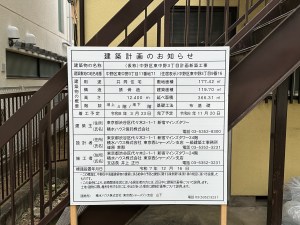
Believe it or not, I stayed at the old place until last year when I had to move. The landlord asked me to leave as they wanted to knock the place down and rebuild. The place was old and I probably should have left long ago, but I stayed as long as I could on the off-chance that you might come looking for me. But of course, you never did, sadly. I even fought eviction for almost a year and a half just to remain there.
Anyway, I eventually did leave, so the place you grew up in will be no more shortly. Lots of memories there. It truly makes me sad that it’s being “disappeared” just as I was disappeared by, well, you know who.
I miss you everyday.
Love,
Your Real Dad
Posted in For My Princess Lili | Leave a Comment »
Good Dreams Gone Bad
“The art of life is the art of avoiding pain: & he is the best pilot who steers clearest of the rocks & shoals with which it is beset.”
– Thomas Jefferson, letter to Maria Cosway, 12 October 1786
In his dreams, Tommy would sometimes be together again with Livy. Although the years had passed in his waking life, in his dreams, she was exactly as he remembered her – a sweet, six-year-old child who still loved her Dad. Nothing had changed in the place he went to in his sleep, and at first, he looked forward to these chance encounters as they were the only time he could still talk to his kid. The child in Tommy’s dreams had not been affected by the distance that now lay between them in the real world, had not yet become the child that her mother wished her to be. In his dreams, the father-daughter bond had not been broken, and life existed as it had before – before she had been taken away from him by the indifferent court system for the sake of “expediency”.
Sometimes in the dreams they would be playing in the park again, with Tommy pushing her on the swings again like they had back in the day. At other times they would just talk the silly talk they had invented together or read Cinderella stories together before Tommy put her to bed at night. The happiest moments in these dreams came when Livy told him “I love you, Daddy” to which he was able to respond – in this ephemeral world that existed only in the land of dreams – that he loved her, too. In these dreams, nothing had changed between them, and everything was right again with the world.
It was always a shock, though, when he opened his eyes and got dragged kicking and screaming back into the real world, the waking world, the world in which his daughter no longer existed for him. He inhabited this world alone, and he began to feel the dreams to be a cruel journey indeed into this land where happiness dwelt. The world that greeted him as he put the night behind him was one in which he had lost what was most precious to him – his only child. And he knew that when he lost her, he had lost the best part of himself – the part that gave without seeking recompense, the part that was capable of unconditional love and self-sacrifice. With the dawn came the tears, occasioned upon the realization that the tender feelings he had experienced in the landscape of his dreams were insubstantial ghosts, mere manifestations of his subconscious mind seeking to make sense of the trauma he had endured.
And so, after a while, Tommy became apprehensive about his dreams. Not the comfort that it brought him being reunited with his daughter, of course, but the foreknowledge that when he awoke, the dreams would be shattered like fragile crystal upon a cold stone floor. With the fear came a reluctance to go to bed at night, and Tommy found himself falling asleep on the sofa night after night only after exhaustion finally took him down. Sleep became the enemy, a fearsome specter that haunted his nights. He was lucky, in fact, if he could manage four hours of sleep a night. While he suffered at his loss during the day, at least, he felt, it was something he could mostly control, something his rational mind and force of will he might overcome. He was helpless as a child in his sleep, visited by days long past that he could never hope to recover, and which vanished like the morning dew as the dawn arrived.
Even worse than the dreams, however, was the alpha state – that twilight period in between sleep and wakefulness. In these brief periods the momentary dreams he experienced were imbued with a reality that far surpassed what he experienced in the actual dream state, and he was at these times unable to distinguish what was real and what was not. These alpha dreams were somehow more than dreams. They were more tangible, more visceral, and he emerged from them confused, as if he had stumbled into another dimension that truly existed, and which he had grasped ever so fleetingly before coming back to his own. These periods were more hallucinations than dreams, yet more palpable than reality. They frightened him as he sometimes felt he was losing his mind, and that he might never find his way back.
To say that Tommy felt his world was unraveling would be a gross understatement. He had always fancied himself to be a rational man, a sensible man, able to decide the course of his life. He used to think of himself as being more or less in control of events that happened upon him, deftly able to find his way around the obstacles that life cast before him. However, the ship he rode upon in his dreams was beyond his control, and many were the times he felt himself dashed upon those rocky shoals of the misfortune he himself was creating, through the restless entreaties of his subconscious mind that had promised smooth sailing and compliant winds to peaceful shores.
To which reality did he now belong, Tommy wondered. To the harsh daylight world that reminded him in a thousand different ways of what he had lost, and yet which he might somehow manage to reconcile, or to the realm of dreams that held the promise of happiness with his only child, only to be snatched invariably from his arms as the light of the rising sun slowly penetrated his eyelids. He belonged to neither place but was a captive of both. His days were met with an all too believable disbelief, and his nights were filled with phantasms of a past he could never hope to recover, with distant shores he knew after he awoke that he could never hope to reach again. Good dreams gone bad.
Posted in For My Princess Lili, Losing Livy | Leave a Comment »

